
What is the cutting force distribution of a block cutting machine?
Leave a message

What is the cutting force distribution of a block cutting machine?
As a supplier of block cutting machines, I've witnessed firsthand the crucial role that understanding cutting force distribution plays in the stone - processing industry. In this blog, we'll delve into the concept of cutting force distribution in block cutting machines, explore its significance, and how it impacts the overall performance of these machines.
Understanding Cutting Force in Block Cutting Machines
Cutting force is the force exerted by the cutting tool on the block of stone during the cutting process. In a block cutting machine, this force is not uniformly distributed. It varies depending on several factors, including the type of cutting tool, the nature of the stone, and the cutting parameters.
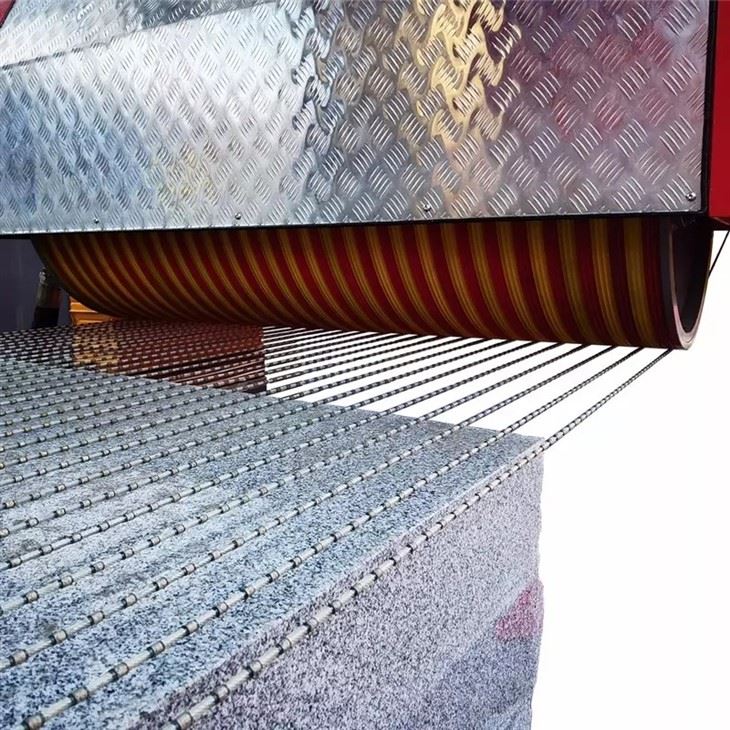
Let's first consider the cutting tool. Different types of cutting tools, such as diamond saw blades, wire saws, etc., have different cutting force characteristics. For instance, a diamond saw blade typically exerts a relatively high concentrated force at the edge of the blade. As the blade rotates and cuts into the stone, the force is mainly concentrated along the cutting edge. On the other hand, a wire saw distributes the cutting force more evenly along the length of the wire. The wire moves continuously through the stone, and the cutting force is spread over a larger area compared to a saw blade.
The nature of the stone also has a significant impact on cutting force distribution. Harder stones, like granite, require more cutting force to be cut. The internal structure of the stone, such as the presence of mineral grains and fractures, can cause the cutting force to fluctuate. For example, when the cutting tool encounters a hard mineral grain, the cutting force may increase suddenly. In contrast, when cutting through a fracture, the force may decrease.
Cutting parameters, such as cutting speed, feed rate, and depth of cut, also affect the cutting force distribution. A higher cutting speed may increase the cutting force, especially if the machine is not properly calibrated. Similarly, a larger feed rate can lead to an increase in the cutting force, as the cutting tool has to remove more material per unit time. The depth of cut also plays a role; a deeper cut generally requires more force.
Significance of Cutting Force Distribution
Understanding the cutting force distribution is essential for several reasons. Firstly, it affects the quality of the cut. If the cutting force is not evenly distributed, it can lead to uneven cuts, rough surfaces, and even chipping of the stone. For example, if the cutting force is concentrated in one area, it may cause the stone to crack or break during the cutting process.
Secondly, it impacts the tool life. An uneven distribution of cutting force can cause excessive wear on the cutting tool. For instance, if a saw blade is subjected to a concentrated force at one point, that area of the blade will wear out faster, reducing the overall lifespan of the tool. By optimizing the cutting force distribution, we can extend the tool life and reduce the cost of tool replacement.
Thirdly, cutting force distribution is related to the energy consumption of the machine. An inefficient distribution of cutting force may require the machine to consume more energy to perform the cutting operation. By ensuring a more even distribution of force, we can reduce the energy consumption and make the cutting process more cost - effective.
Factors Affecting Cutting Force Distribution
- Tool Design: The design of the cutting tool is a major factor. For example, the shape and size of the diamond segments on a saw blade can influence how the cutting force is distributed. A well - designed tool can distribute the force more evenly, reducing stress on the tool and the stone.
- Stone Properties: As mentioned earlier, the hardness, density, and internal structure of the stone all affect the cutting force distribution. Different types of stones require different cutting strategies to ensure an even distribution of force.
- Machine Settings: The settings of the block cutting machine, such as the cutting speed, feed rate, and depth of cut, can be adjusted to optimize the cutting force distribution. For example, by reducing the feed rate, we can reduce the cutting force and make the distribution more even.
Measuring and Analyzing Cutting Force Distribution
To understand the cutting force distribution, we can use various measurement techniques. One common method is to use force sensors. These sensors can be placed on the cutting tool or the machine structure to measure the force at different points during the cutting process. By collecting and analyzing this data, we can gain insights into how the cutting force is distributed.
Another approach is to use computer - aided simulation. Software can be used to model the cutting process and predict the cutting force distribution based on the tool design, stone properties, and machine settings. This allows us to optimize the cutting process before actual cutting, reducing the risk of tool damage and improving the quality of the cut.
Our Block Cutting Machines and Cutting Force Distribution
At our company, we are committed to providing high - quality block cutting machines that optimize cutting force distribution. Our Marble Wire Saw Machine is designed with advanced technology to ensure an even distribution of cutting force. The wire saw is made of high - quality materials and has a unique design that allows it to cut through marble with minimal force fluctuations.
Our Block Stone Machine is also engineered to handle different types of stones with optimal cutting force distribution. It is equipped with adjustable cutting parameters, allowing operators to fine - tune the cutting process according to the specific properties of the stone.
In addition, our Multi Wire Saw Cutting Machine is designed to cut multiple slabs simultaneously. This machine distributes the cutting force evenly across all the wires, ensuring consistent and high - quality cuts.
Conclusion
In conclusion, understanding the cutting force distribution of a block cutting machine is crucial for achieving high - quality cuts, extending tool life, and reducing energy consumption. By considering factors such as tool design, stone properties, and machine settings, we can optimize the cutting force distribution. At our company, we offer a range of block cutting machines that are designed to provide optimal cutting force distribution for different types of stones.
If you are in the market for a block cutting machine and want to learn more about how our machines can meet your needs, we invite you to contact us for a detailed discussion. Our team of experts is ready to assist you in choosing the right machine and optimizing your cutting process.
References
- Smith, J. (2018). "Cutting Force Analysis in Stone Processing Machines". Journal of Stone Technology, 15(2), 34 - 45.
- Johnson, R. (2019). "Optimizing Cutting Force Distribution in Block Cutting Machines". International Journal of Manufacturing Science, 22(3), 123 - 135.