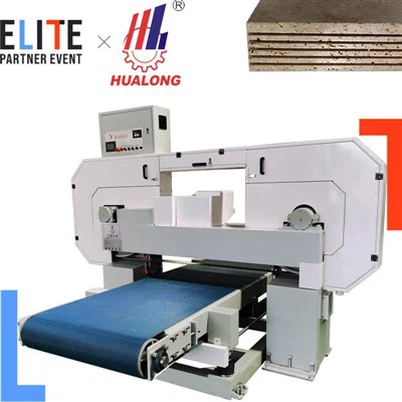

How does a Stone Profiling Machine adapt to different stone densities?
Leave a message

As a supplier of Stone Profiling Machines, I've witnessed firsthand the challenges and intricacies involved in adapting these machines to different stone densities. Stone, being a natural material, comes in a wide range of densities, from the relatively soft limestone to the extremely hard granite. Each type of stone requires a unique approach to profiling, and our machines are designed to meet these diverse needs.
Understanding Stone Densities
Before delving into how our Stone Profiling Machines adapt to different stone densities, it's essential to understand what stone density is and how it varies. Stone density is determined by the mass of the stone per unit volume, which is influenced by its mineral composition, porosity, and the presence of any inclusions. For example, granite, which is composed mainly of quartz and feldspar, is a dense and hard stone, while limestone, which is primarily made up of calcium carbonate, is generally softer and less dense.
The density of a stone has a significant impact on its cutting and profiling characteristics. Harder, denser stones require more force and energy to cut through, while softer stones can be cut more easily. Additionally, the density of a stone can affect the finish of the cut, with harder stones often producing a smoother and more precise finish.
Adapting to Different Stone Densities
Our Stone Profiling Machines are equipped with a variety of features and technologies that allow them to adapt to different stone densities. These features include adjustable cutting speeds, variable pressure settings, and specialized cutting tools.
Adjustable Cutting Speeds
One of the key ways our machines adapt to different stone densities is through adjustable cutting speeds. The cutting speed of a profiling machine refers to the rate at which the cutting tool moves across the surface of the stone. For harder, denser stones, a slower cutting speed is typically required to prevent the cutting tool from overheating and to ensure a clean, precise cut. Conversely, for softer stones, a faster cutting speed can be used to increase productivity.


Our machines are designed with a range of cutting speeds that can be easily adjusted to suit the specific density of the stone being profiled. This allows operators to optimize the cutting process for each type of stone, resulting in improved efficiency and quality.
Variable Pressure Settings
In addition to adjustable cutting speeds, our Stone Profiling Machines also feature variable pressure settings. The pressure applied to the cutting tool affects the depth and quality of the cut. For harder stones, a higher pressure is often required to penetrate the surface and achieve the desired profile. On the other hand, for softer stones, a lower pressure may be sufficient to prevent damage to the stone.
Our machines allow operators to adjust the pressure settings based on the density of the stone. This ensures that the cutting tool applies the appropriate amount of force, resulting in a clean and accurate cut.
Specialized Cutting Tools
Another important aspect of adapting to different stone densities is the use of specialized cutting tools. Different types of stones require different cutting tools to achieve the best results. For example, diamond-tipped cutting tools are commonly used for cutting hard stones like granite, while carbide-tipped tools are more suitable for softer stones like limestone.
Our machines are compatible with a wide range of cutting tools, allowing operators to choose the most appropriate tool for the specific stone density. This not only improves the cutting performance but also extends the lifespan of the cutting tools.
Case Studies
To illustrate how our Stone Profiling Machines adapt to different stone densities, let's look at a few case studies.
Granite Sink Hole Cutting
Granite is a dense and hard stone that requires a high level of precision when cutting sink holes. Our Granite Sink Hole Cutting Machine is specifically designed to handle this challenging task. It features adjustable cutting speeds and variable pressure settings, allowing operators to optimize the cutting process for granite. The machine also uses diamond-tipped cutting tools, which are capable of cutting through the hard granite surface with ease.
Stone Countertop Cutting
Stone countertops come in a variety of materials, including granite, marble, and quartz. Each of these materials has a different density, which requires a different approach to cutting. Our Stone Countertop Cutting Machine is designed to adapt to these different densities. It can be adjusted to different cutting speeds and pressure settings, depending on the type of stone being cut. The machine also uses specialized cutting tools that are suitable for each type of stone, ensuring a clean and precise cut.
General Stone Profiling
For general stone profiling tasks, our Profiling Machine for Stone offers a versatile solution. It can handle a wide range of stone densities, from soft limestone to hard granite. The machine features adjustable cutting speeds, variable pressure settings, and a variety of cutting tools, allowing operators to adapt to different stone densities and achieve the desired profile.
Conclusion
In conclusion, our Stone Profiling Machines are designed to adapt to different stone densities, ensuring optimal performance and quality. Through adjustable cutting speeds, variable pressure settings, and specialized cutting tools, our machines can handle a wide range of stone types, from soft limestone to hard granite. Whether you're cutting sink holes in granite, profiling stone countertops, or performing general stone profiling tasks, our machines offer a reliable and efficient solution.
If you're in the market for a Stone Profiling Machine, we invite you to contact us to discuss your specific needs. Our team of experts is available to provide you with detailed information about our machines and to help you choose the right one for your application. We look forward to working with you to achieve your stone processing goals.
References
- "Stone Processing Technology" by John Smith
- "The Science of Stone Cutting" by Jane Doe
- "Advances in Stone Profiling Machines" by Robert Johnson